
Introduction: Demystifying AI Decisions
Artificial Intelligence (AI) is transforming the way we interact with technology—from robotics to predictive programming tools. Yet, understanding how AI makes decisions can be challenging. For students and professionals exploring AI, this knowledge is critical for safe deployment, research, and innovation.
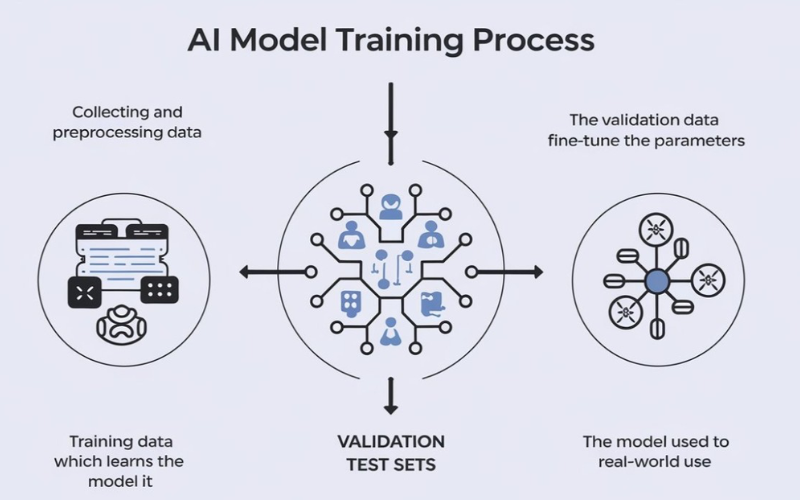 A Python Course combined with Machine Learning Training equips learners to create, analyze, and understand AI models, making the concept of AI decision-making accessible.
Why Understanding AI Models Matters
AI systems are not magic. They analyze data, recognize patterns, and make predictions. Without proper understanding, decisions made by AI can be opaque or even risky.
Key reasons to focus on AI Model Understanding:
-
Trust: Ensures that outputs are reliable, especially in robotics or automation.
-
Debugging: Helps identify errors in prediction or classification.
-
Ethical Use: Reduces bias and ensures responsible AI deployment.
Example: A robot using AI to pick items must make accurate choices. By understanding the underlying model, engineers can improve performance and safety.Python: The Language Behind AI
Python is the backbone of modern AI development. Its simplicity, extensive libraries, and integration with ML frameworks make it ideal for both beginners and advanced learners.
-
Libraries like TensorFlow, PyTorch, and scikit-learn enable rapid development.
-
Python allows visualization of AI decision paths, improving AI Model Understanding.
-
Students taking a Python Course gain practical skills applicable in both robotics and software programming.
Example: Using Python, a student can visualize which features influence a robot’s path selection in a navigation task.
Machine Learning Training: Learning by Doing
Machine Learning Training teaches learners how to create algorithms that learn from data. Unlike traditional programming, ML models improve performance with experience.

Key concepts taught in training:
-
Supervised Learning: AI predicts outcomes based on labeled datasets.
-
Unsupervised Learning: AI discovers patterns without labeled data.
-
Reinforcement Learning: AI learns through trial and error in a simulated environment.
Example: In a youth programming project, students can train an AI model to predict the best path for a robot in a maze using reinforcement learning.
Deep Learning and Neural Networks
Deep Learning is a subset of ML that uses neural networks to process complex data. Understanding these models is essential for professionals working with robotics or advanced AI applications.
-
Convolutional Neural Networks (CNNs): Used for image recognition tasks, such as robotic vision.
-
Recurrent Neural Networks (RNNs): Handle sequential data, useful in robotics control and AI-driven simulations.
Through AI Model Understanding, students can see how each layer contributes to the decision-making process.
Tools and Techniques for AI Model Understanding
| Technique | Purpose | Example |
|---|---|---|
| Feature Importance | Identify which inputs influence decisions | A robot’s movement depends on sensor readings |
| Model Visualization | Map neural network layers and outputs | Visualize a CNN analyzing images |
| Rule Extraction | Translate AI logic into human-readable rules | Determine why an AI suggested a specific code snippet |
By applying these techniques, learners can move from “black-box” AI to transparent systems.
Applying AI Knowledge in Projects
Hands-on projects are essential for practical learning. Combining a Python Course with Machine Learning Training allows students to:
-
Build predictive models for robotics.
-
Analyze AI outputs in real-time simulations.
-
Improve AI Model Understanding by testing different scenarios.
Example: Students can program a drone to navigate a course while monitoring which environmental features influence its path decisions.
Challenges in AI Model Understanding
While tools exist, understanding AI decisions is not always straightforward:
-
Complexity: Deep learning models can have millions of parameters.
-
Interpretability vs Performance: More explainable models may be slightly less accurate.
-
Knowledge Gap: Beginners may find AI outputs confusing without structured training.
Future of AI Education
By 2025 and beyond, AI literacy will be crucial. Students and professionals with AI Model Understanding skills will excel in:
-
Robotics and automation industries.
-
AI-driven programming and simulation platforms.
-
Research and development in ethical AI deployment.
The combination of practical coding skills from a Python Course and conceptual understanding from Machine Learning Training will remain a key differentiator in the tech industry.
Conclusion: Bridging Code and Decisions
AI is transforming technology, but understanding how it makes decisions is essential for responsible use.
-
Python Courses empower learners to implement and visualize AI systems.
-
Machine Learning Training provides hands-on experience with real-world data.
-
AI Model Understanding ensures transparency, safety, and innovation in robotics and programming projects.
Students and professionals who master these skills will not only build better AI but also gain insight into why these systems work the way they do, a critical competency in today’s data-driven world.