

Natural Language Processing (NLP)
Natural language processing bridges the gap between human communication and computer understanding, enabling machines to comprehend and generate text in ways that mimic human language capabilities. This critical field forms the backbone of today’s most impressive generative AI applications.
NLP Overview
NLP combines computational linguistics with machine learning to help computers process human language in both written and spoken forms . This technology powers everything from search engines and translation tools to voice assistants and sentiment analysis systems across diverse sectors. Through techniques like tokenization, part-of-speech tagging, and word embeddings, NLP transforms unstructured text into structured, actionable insights .
Why NLP is Crucial for LLMs
NLP serves as the foundation for Large Language Models (LLMs), enabling them to understand context, grammar, and semantics . The global NLP market is projected to reach $43.00 billion by 2025 . driven by its applications in chatbots, virtual assistants, and content automation. Recent breakthroughs in transformer models, primarily Google’s BERT, have revolutionized search capabilities and text generation .
NLP Tools and Libraries
Key NLP tools for beginners include:
- NLTK: A comprehensive Python platform for language data processing
- spaCy: Offers efficient pipelines supporting 72+ languages
- Hugging Face Transformers: Provides pre-trained models like BERT and GPT
- LangChain: Connects LLMs with external tools and data sources
NLP Engineer Salary Potential
NLP engineers earn between $122,000 and $150,000 annually . Experienced professionals with 10-14 years of experience can command up to $144,830 , while those at top tech companies like Google and Apple can earn between $207,000 and $321,000 . According to recent data, NLP engineering salaries can reach as high as $231,000 for senior specialists .
Reinforcement Learning (RL) represents a distinctive AI paradigm where machines learn through trial and error, mirroring how humans acquire skills by interacting with their surroundings.
Reinforcement Learning Overview
Unlike traditional machine learning approaches, RL centers on agents making sequential decisions while optimizing actions based on environmental feedback . This interaction forms a fundamental feedback loop—the agent observes the environment’s state, selects an action according to its policy, and receives rewards or penalties . The balance between exploration (trying new actions) and exploitation (leveraging known successful strategies) remains crucial for effective learning .
Why RL is Important for Autonomous AI
RL excels in scenarios where explicit programming of all possibilities becomes impractical . For autonomous vehicles, RL algorithms continuously learn from driving data to enhance decision-making across varied traffic scenarios . Primarily, RL enables systems to adapt to unpredictable environments, making it invaluable for robotics, finance, and logistics applications . Since machines can generalize patterns from experience, they develop resilience in complex, dynamic settings without human intervention.
RL Frameworks and Libraries
Key tools for implementing reinforcement learning include:
- PyTorch/TensorFlow: Core frameworks for building RL models
- OpenAI Gym: Standard environment for algorithm testing
- Google’s TF-Agents: Specialized library for RL implementation
- Automated RL (AutoRL): Emerging toolset that eases employment of RL techniques
Reinforcement Learning Salary Potential
As of October 2025, reinforcement learning engineers earn an average annual salary of $126,760 in New York . Top earners (90th percentile) make approximately $195,832 annually . Geographical location significantly impacts earnings—New York County offers the highest at $127,450, followed closely by New York City at $127,091 . Related positions like AWS Machine Learning Engineers command even higher compensation, averaging $159,428 annually.
Data Engineering for AI Pipelines
Behind every successful AI application lies a robust data foundation built by skilled professionals. Data engineering forms the critical infrastructure layer that powers generative AI innovations, making it an essential skill for beginners entering the field in 2025.
Data Engineering Overview
Data engineers specialize in constructing and maintaining the infrastructure that enables large-scale data analysis. They design scalable pipelines, robust architectures, and data warehouses that ensure information is collected, stored, and made accessible in reliable formats . Their expertise focuses primarily on efficiency and ensuring the right data reaches analysts and scientists at precisely the right time. Without their infrastructure, organizations would struggle to process the massive volumes of structured and unstructured data generated daily .
Why Data Engineering Supports AI
Data engineers have evolved from behind-the-scenes roles to become integral to business success—a view held by 72% of surveyed technology leaders. Their influence has grown as AI becomes central to enterprise strategy. Interestingly, the proportion of time data engineers devote to AI projects has nearly doubled from 19% in 2023 to 37% in 2025, with projections suggesting this will reach 61% by 2027. In effect, data engineers are quietly transforming into AI engineers , as they already possess expertise in the pipelines that feed AI systems.
Tools for Data Engineering
Key tools and platforms in the AI data engineer’s toolkit include:
- Apache Spark: Powers distributed data workflows for large-scale datasets
- Snowflake: Provides cloud-based data management with independent scaling
- Vector databases: Specialized storage like Pinecone for unstructured AI data
- ETL frameworks: Systems for extracting, transforming and loading data
Data Engineer Salary Potential
The average data engineer salary ranges between $125,000 and $130,000 annually . Entry-level positions typically offer between $75,000-$110,000, while mid-to-senior roles command $125,000-$160,000, with top earners reaching up to $210,000 . Location significantly impacts earnings—Burlington, MA leads with $168,333, followed by San Jose at $166,154 and Richmond, VA at $154,010 . Data engineers working at specialized AI companies might earn between $117,000-$168,000, with additional bonuses averaging around $8,000 per year.
Cloud Computing for AI Deployment
Cloud infrastructure forms the backbone that propels generative AI from research into real-world applications, enabling organizations to scale sophisticated models without massive hardware investments.
Cloud Computing Overview
Cloud computing delivers computing services—including servers, storage, and databases—over the internet, allowing users to rent IT resources rather than buying them . This pay-as-you-go model provides scalable, on-demand access to computing power without managing physical hardware . At its core, cloud platforms offer infrastructure services alongside AI-backed tools that simplify generative AI deployment.
Why Cloud Skills are Essential
Cloud expertise has become indispensable for AI practitioners because training generative AI systems requires extensive computational resources. Initially, cloud platforms eliminate the need for developers to build and manage infrastructure just to host AI platforms . Global spending on cloud services exceeded USD 482 billion by the end of 2022, a 54% rise from 2020 . Furthermore, cloud computing provides unparalleled elasticity for AI workloads that experience varying demands .
Top Cloud Platforms for AI
Major providers offering robust AI capabilities include:
- AWS: Features SageMaker for end-to-end machine learning workflows
- Microsoft Azure: Leverages OpenAI partnership for market-leading generative AI offerings
- Google Cloud: Positions AI as a core component with specialized NLP capabilities.
Cloud AI Engineer Salary Potential
Cloud engineers focusing on AI command impressive compensation, with median annual salaries reaching USD 140,000 for AWS specialists. Generally, Azure cloud engineers earn approximately USD 141,619 yearly , while Google Cloud engineers typically make USD 143,000 annually.
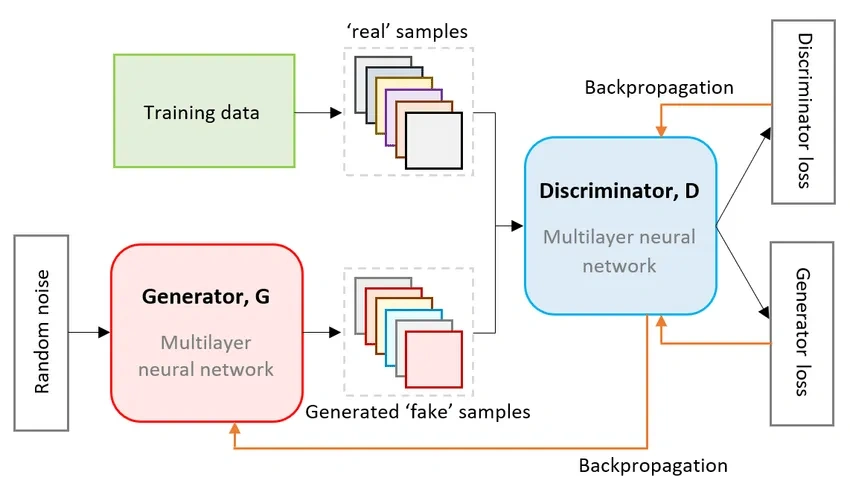
Generative Adversarial Networks represent one of the most ingenious architectures in AI, functioning through a competitive relationship between two neural networks that jointly create remarkably realistic content.
GANs Overview
GANs consist of two neural networks locked in an adversarial competition: a generator that creates data and a discriminator that evaluates authenticity . Through this unique structure, the generator transforms random noise into synthetic data while the discriminator attempts to distinguish between real and generated samples. As training progresses, both networks continuously improve—the generator creates increasingly realistic outputs while the discriminator becomes more discerning .
Why GANs are Core to Generative AI
GANs excel at creating photorealistic images, performing style transfers, and generating synthetic data for training other models . First introduced by Ian Goodfellow in 2014, these networks have fundamentally transformed generative modeling by making it easier to develop algorithms capable of creating high-quality, realistic data. Their lightweight architecture offers computational efficiency that makes them ideal for edge deployment, even as other AI architectures gain prominence.
Popular GAN Architectures
Several specialized GAN variants serve different purposes:
- Conditional GANs: Add labeled information to guide specific outputs
- Deep Convolutional GANs (DCGANs): Employ CNNs for superior image generation
- StyleGAN: Creates ultra-high resolution images up to 1024×1024 pixels
- CycleGAN: Enables unpaired image-to-image translation
GAN Engineer Salary Potential
GAN engineers earn substantial compensation, with annual salaries ranging from $158,416 to $262,756 . The median total pay reaches approximately $202,534 per year or $97 per hour . Ultimately, top performers can command up to $329,177 annually (90th percentile).
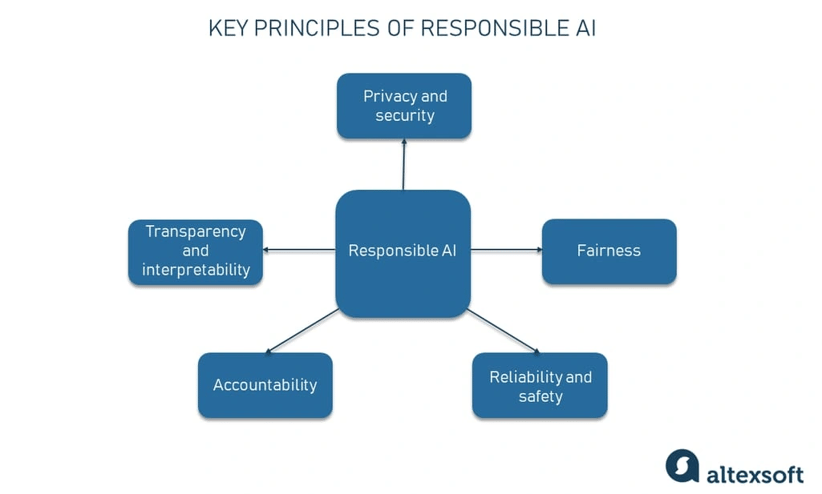 The ethical dimension of artificial intelligence stands as a crucial career skill for 2025, balancing technological advancement with responsible innovation and human values protection.
Overview of Generative AI Tools
Generative AI tools transform text prompts into tangible outputs like images, videos, and written content. Each platform serves distinct purposes—ChatGPT excels at conversational text generation, Midjourney creates stunning visual art, while Claude AI offers advanced logical reasoning capabilities . These applications represent different approaches to AI-powered creation, yet all operate through similar principles of understanding and generating human-like outputs.
Why Tool Proficiency Matters
The ability to effectively use AI tools is rapidly shifting from optional skill to fundamental requirement. During performance reviews, employers now track measurable AI metrics including time saved, productivity improvements, and creative tool usage . Just as computer literacy became essential in previous decades, AI literacy now represents the new universal workplace requirement for continued professional relevance .
Top Tools to Learn in 2025
Several standout platforms deserve attention:
- ChatGPT - Leads in conversational AI and enterprise productivity
- Midjourney - Excels in high-quality image generation across diverse styles
- Claude AI - Specializes in “Constitutional AI” with ethical guardrails
- Google Gemini - Offers advanced multimodal capabilities
Tool Specialist Salary Potential
AI Tool Specialists earn an average annual salary of $111,443, with top performers (90th percentile) reaching $191,220 . The typical compensation range falls between $84,428 and $148,653, depending on experience and location . Senior specialists with extensive tool expertise can command up to $311,127 annually .
Conclusion
The rapid growth of AI adoption across industries means professionals who combine multiple skills from this list stand to benefit the most. Companies desperately need qualified talent who understand both technical aspects and ethical considerations of these powerful technologies. Beginners should consider starting with foundational skills like Python and generative AI tools before progressing to more specialized domains.
The AI revolution has accelerated faster than many predicted. Those who act now to develop expertise across multiple areas will position themselves at the forefront of this technological transformation. Your journey into generative AI begins with choosing which of these essential skills aligns best with your interests and career goals.