

Introduction: Clearing the Confusion Around Data Science and AI
Over the last few years, students and early professionals have been asking the same question again and again:
Is data science replaced by Artificial Intelligence (AI)?
With tools like Generative AI writing code, creating reports, and even analyzing data, the confusion is understandable. Many people wonder whether learning data science still makes sense or if AI will simply take over everything.
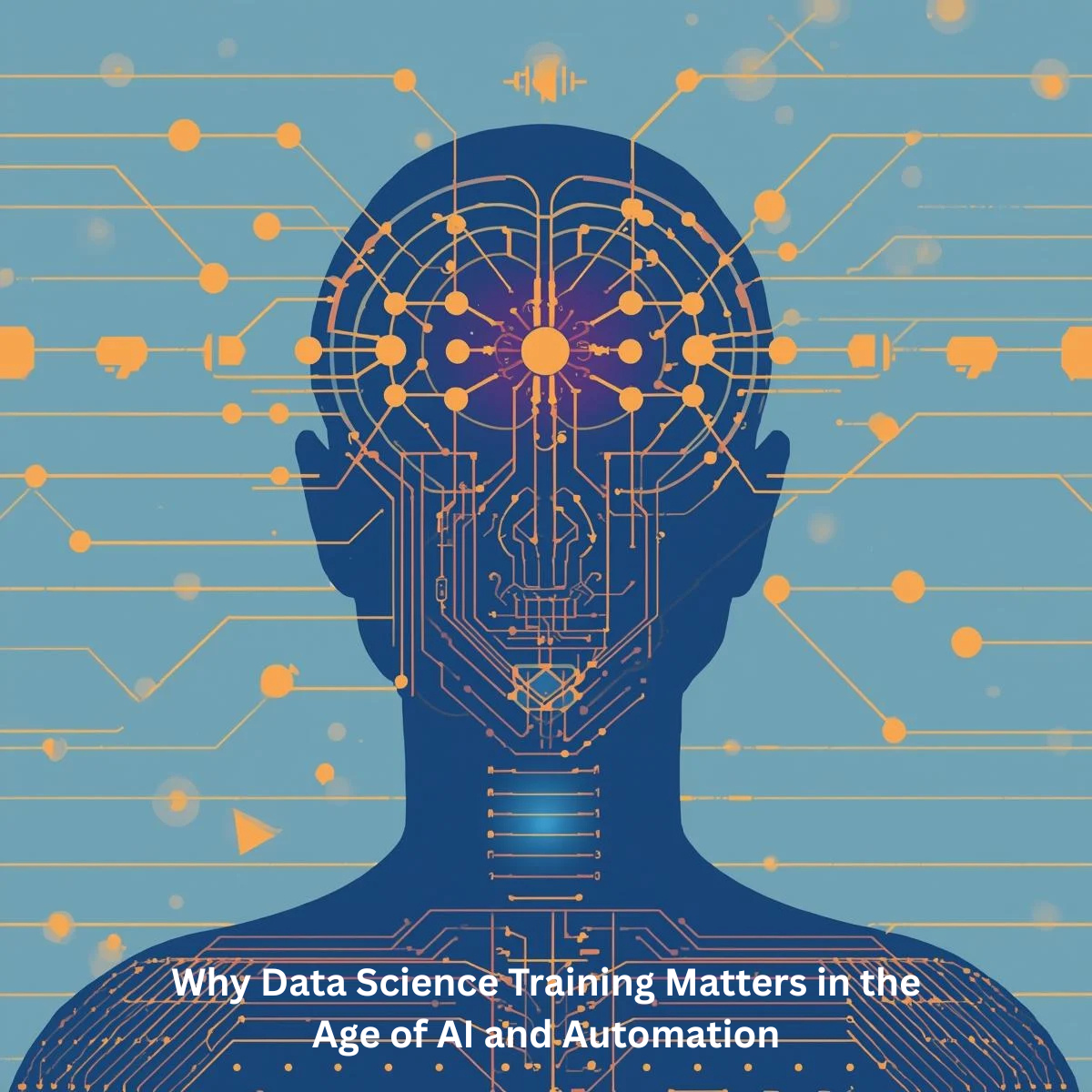 The reality is more layered. AI systems do not appear magically. They are built, trained, monitored, and improved using data science principles. At the same time, the massive growth in IoT data, automation systems, and digital platforms has made structured decision-making more important than ever. This is why data science training still matters, especially when combined with human judgment and the role of soft skills.
This article breaks the topic down simply and clearly, without hype, and explains why data science remains a first choice for smart career decisions in the age of AI and automation.
Concept Explained Simply: Data Science vs AI vs Automation
Data science is the practice of turning raw data into useful understanding. It involves collecting data, cleaning it, finding patterns, building models, and explaining results in a way that people can act on.
Artificial Intelligence is a broader idea. It refers to systems that can perform tasks that usually require human intelligence, such as recognizing images, understanding language, or making predictions. Most AI systems depend heavily on data science for their foundation.
Automation is about using technology to perform repetitive or rule-based tasks without human intervention. Automation becomes smarter when AI and data science are involved.
So, instead of replacing data science, AI is deeply integrated with it. The integration with AI/ML (especially Generative AI) has changed how data scientists work, but it has not removed the need for them. AI tools assist, but humans still define problems, validate outputs, and make final decisions.
Industry Relevance: How Data Science Is Used Today
In real IT and tech environments, data science sits at the center of decision-making.
In manufacturing, sensors generate continuous streams of data. This massive growth in IoT data helps companies predict machine failures before they happen. Data scientists design models that interpret this data and decide what patterns actually matter.
In finance, AI models flag unusual transactions, but data science teams define risk thresholds, test fairness, and ensure models behave responsibly.
In healthcare, AI can analyze scans or patient records, but data science is used to validate accuracy, reduce bias, and explain results to doctors and regulators.
Even Generative AI tools rely on data science methods like probability modeling, evaluation metrics, and feedback loops. According to MIT Professor Devavrat Shah, whose work focuses on data-driven decision systems, strong mathematical and data foundations remain essential for building reliable AI systems.
Across industries, data science is not disappearing. It is becoming more connected to AI, ethics, and real-world impact.
Tools and Skills Overview: What Modern Data Science Involves
Modern data science training goes beyond writing algorithms. It focuses on a balanced skill set that includes both technical and human abilities.
Core Technical Skills
-
Statistics and probability for understanding patterns
-
Machine learning fundamentals
-
Data visualization to explain insights clearly
-
Working with structured and unstructured data
AI and Advanced Areas
-
Integration with AI/ML workflows
-
Understanding Generative AI outputs and limitations
-
Model evaluation and validation
-
Basic knowledge of cloud platforms and data pipelines
Human and Professional Skills
-
The role of soft skills like communication and critical thinking
-
Problem framing and asking the right questions
-
Ethical reasoning and responsible AI awareness
-
Collaboration with non-technical teams
These skills together help professionals move from “running models” to actually influencing decisions.
Career Impact: Long-Term Value of Data Science Knowledge
For students and freshers, data science offers more than a job title. It builds a way of thinking that stays useful even as tools change.
Understanding data science helps professionals:
-
Adapt to new AI tools instead of being replaced by them
-
Move into roles like data analyst, AI analyst, product analyst, or strategy roles
-
Participate in cross-functional teams where data-driven thinking is required
-
Make sense of automation systems rather than just operating them
Careers today are less about mastering one tool forever and more about learning how systems work underneath. Data science provides that foundation. This is why it continues to be a first choice for smart career decisions, especially for those planning long-term growth.
A Note on Learning Pathways
Many learners today explore structured guidance from industry-aligned education providers such as Netmax Technologies, which focus on building practical understanding of data science concepts alongside modern AI use cases. For a general overview of learning pathways, readers can refer to this resource:
https://netmaxtech.com/
Frequently Asked Questions
Q.1. Is data science replaced by Artificial Intelligence (AI)?
No. AI depends on data science for training, validation, and improvement. Data science has evolved to work alongside AI rather than being replaced by it.
Q.2. Do I need to learn Generative AI if I am studying data science?
Understanding Generative AI is helpful, but it should come after building strong basics in statistics, data handling, and machine learning.
Q.3. Why is the role of soft skills important in data science careers?
Because insights only matter when they are understood and trusted. Communication, reasoning, and ethical judgment are essential in real-world projects.
Q.4. How does IoT data change the scope of data science?
The massive growth in IoT data introduces scale, speed, and complexity. Data scientists design systems that filter, analyze, and act on this data reliably.
Q.5. Is data science suitable for freshers and non-technical backgrounds?
Yes, with the right learning approach. Many concepts can be learned step by step, especially when explained with practical examples and real use cases.
Closing Thought
In the age of AI and automation, data science is not about competing with machines. It is about understanding them, guiding them, and using them responsibly. For those starting their journey today, data science remains a future-proof skill set rooted in logic, curiosity, and human judgment.